

Blog
Wagyu Chateaubriand Explained: Japan’s Most Premium Cut

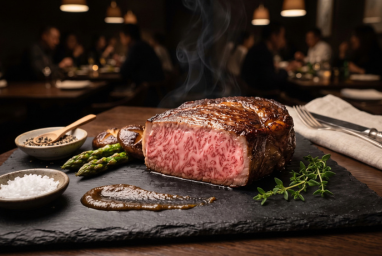
Wagyu Chateaubriand Explained: Japan’s Most Premium Cut
Order enough yakiniku in Tokyo and eventually the menu throws a French word at you in the middle of an otherwise Japanese lineup. Chateaubriand. It sits near the top of the price list, usually labeled “finest” or “premium,” and most diners order it without actually knowing what makes it different from everything else on the grill.
Fair question. What is chateaubriand wagyu, and does it actually deserve the price tag?
Chateaubriand Is a Cut, Not a Grade
Start with the basic confusion. Chateaubriand has nothing to do with A5 or marbling scores. It is a specific section of the tenderloin, the thick center-cut portion of the filet, named after the French writer and diplomat Chateaubriand, for whom the dish was reportedly created in the early 1800s.
The tenderloin itself is the least worked muscle on the animal, running along the spine where it does almost no heavy lifting. Less use means less connective tissue, which is exactly why tenderloin cuts are famous for tenderness above everything else. Chateaubriand specifically refers to the thickest, most centered portion of that tenderloin, which means every tenderloin only yields a small amount of true chateaubriand.
That scarcity, not marbling, is the first reason it costs more than most other cuts.
Why It’s Considered Japan’s Most Premium Cut
Combine an already-rare cut with genuine A5 wagyu, and you get something restaurants can only serve in limited quantity no matter how much they want to sell. A single wagyu tenderloin does not yield much chateaubriand at all compared to how much sirloin or rib comes off the same animal.
When that scarce cut also carries A5 marbling, you get a texture that is unusual even by wagyu standards. Regular wagyu cuts are prized for marbling melting through the meat as it cooks. Chateaubriand adds baseline tenderness on top of that marbling, since the tenderloin was never a heavily worked muscle to begin with. The result is a cut that is tender first and rich second, rather than the other way around.
How It’s Different From a Regular Sirloin or Rib Cut
Sirloin and rib cuts carry more fat overall, which is exactly what produces that classic yakiniku char and aroma when it hits hot charcoal. Chateaubriand carries far less external fat and relies on internal marbling instead, which changes how it should be cooked.
A well-marbled rib cut can handle a slightly longer sear without drying out, because the fat protects it. Chateaubriand cannot. Overcook it even slightly and the tenderness that justifies the price disappears, replaced by a texture no different from an ordinary cut cooked too long.
How Chateaubriand Should Actually Be Cooked
This is where a lot of the price tag either gets justified or wasted. Chateaubriand is traditionally cut thicker than standard yakiniku slices specifically because it needs a proper sear on the outside while staying rare to medium-rare inside. A thin slice, cooked the way you would cook tongue or short rib, loses the entire point of the cut.
A good kitchen sears it hot and fast on each side, then lets it rest briefly before serving, the same way a Western steakhouse would treat a filet mignon. The goal is a defined crust with a warm, barely-cooked center, not the fully-cooked-through approach used for thinner cuts elsewhere on the grill.
New to yakiniku entirely?
Our Wagyu Cuts Explained guide covers tan, karubi, and harami if you want the fuller picture before choosing what to order.
Is Chateaubriand Worth Ordering
Here is the honest answer. If you are ordering yakiniku purely for smoky char and bold grilled flavor, chateaubriand is not where that flavor lives. Its appeal is almost entirely about tenderness and a cleaner, more refined bite than fattier cuts provide.
If you specifically want to understand what makes A5 wagyu tenderloin different from every other cut on the table, it is genuinely worth the price at least once. Most people who try it end up describing it less as “delicious” in the usual sense and more as “unlike anything else they have eaten,” which is a different kind of value than flavor alone.
A Quick Way to Decide
Order chateaubriand if you want the single most tender bite on the menu and are comfortable paying for scarcity. Skip it if your priority is bold, smoky flavor, since richer, fattier cuts deliver that more directly and at a lower price point.
Either way, it helps to try it alongside other cuts rather than as your only order, since comparing the tenderness directly against a fattier cut is what actually makes the difference obvious.
Chateaubriand at Gyu Sakura
At Gyu Sakura, our Finest Chateaubriand is featured in our Special Yakiniku Course, made from halal certified Miyazaki A5 wagyu and grilled over traditional sumibiyaki charcoal. Because it is a limited cut by nature, it is served as part of a structured course rather than an unlimited à la carte item, which keeps the sourcing and quality consistent every time it is served.
We are located 4 minutes from Okachimachi Station and 8 minutes from Ueno Station, open 7 days a week.
The Bottom Line
Chateaubriand earns its reputation from scarcity and tenderness, not from marbling alone. It is a small, specific section of the tenderloin that every animal produces very little of, and pairing that natural rarity with A5 grade wagyu is what makes it Japan’s most premium cut rather than just its most expensive one.
Reserve your table: reservation.wagyusakura.com
Call us: 03-5826-4170
Visit: 6F, Okachimachi, Tokyo, 4 minutes from Okachimachi Station, 8 minutes from Ueno Station