

Blog
What Is Tan-Moto? Japan’s Rarest Wagyu Tongue Cut

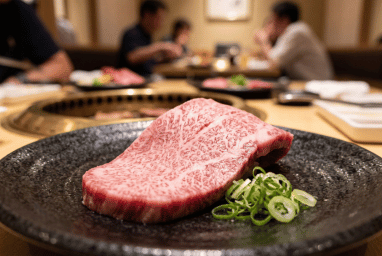
What Is Tan-Moto? Japan’s Rarest Wagyu Tongue Cut
Every yakiniku menu has a tongue section, and most of it looks the same to someone ordering for the first time. Thin tongue, thick tongue, salted tongue, green onion tongue. Then, occasionally, a menu lists something called tan-moto at nearly double the price of everything else in that section, with no real explanation of why.
So what is tan-moto wagyu, and does it actually deserve that price gap?
What Is Tan-Moto Wagyu? A Specific Section, Not a Grade
Tongue, or tan, is not one uniform piece of meat. It runs from the thick, muscular base near the throat down to the thinner, more worked tip. Different sections along that length have noticeably different textures, and tan-moto refers specifically to the base section, the thickest and most tender part of the entire tongue.
The tip end of the tongue does far more work chewing and moving, which makes it tougher and leaner. The base does comparatively little of that work, which is exactly why tan-moto ends up softer, richer, and more marbled than tongue cut from anywhere else along its length.
Why It’s Considered the Rarest Yakiniku Tongue Cut
A single tongue only has one base section. Where a restaurant might get a reasonable amount of standard tan from the middle and tip portions, tan-moto yields a genuinely small amount per animal. That scarcity alone would justify a higher price, but it is not the only factor.
Because the base carries more fat and better texture, it also grills differently than the leaner sections, rewarding a kitchen that knows how to treat it properly rather than cooking it the same way as thin-sliced tongue elsewhere on the menu.
Tan-Moto vs Regular Tongue: What Actually Changes
Regular tongue, sliced thin, cooks in seconds and delivers a clean, slightly chewy bite with a light char. It is a reliable starter cut precisely because it is quick and forgiving.
Tan-moto is thicker, richer, and more forgiving of a slightly longer sear, closer in feel to a tender cut of steak than to typical thin-sliced tongue. Where regular tongue is often finished with a citrus and salt dressing to brighten a lean bite, tan-moto can stand on its own with minimal seasoning, since the natural fat already carries most of the flavor.
How Tan-Moto Should Be Ordered and Cooked
Because it is thicker than standard tongue slices, tan-moto benefits from a slightly longer time on the grill than you would give thin-cut tan, but still far less than a fattier cut like sirloin. A light sear on each side is usually enough to bring out the texture without pushing it toward tough.
Red more Gidue: Wagyu Cuts Explained: Tan, Karubi, Harami & What to Try First
It also works well as an early cut in a meal, similar to how regular tongue is traditionally used to open a yakiniku course, just with more richness behind it. Ordering it first, before heavier cuts, lets its more delicate qualities stand out rather than getting lost after a plate of fattier wagyu.
Is Special Tan-Moto in Tokyo Worth the Price
Understanding tan-moto wagyu properly is really about knowing which section of the tongue you’re paying extra for. Given how rarely tan-moto shows up at all, and how little of it any single animal produces, restaurants that offer it are usually making a deliberate sourcing choice rather than padding a menu. If a restaurant lists tan-moto specifically, rather than just labeling everything “premium tongue,” that specificity is generally a good sign the kitchen actually sources it as its own distinct cut.
For anyone who has already tried standard tongue and karubi and is looking for something less common to compare against, tan-moto is one of the more interesting ways to explore how much texture can vary within a single part of the animal.
Tan-Moto at Gyu Sakura
At Gyu Sakura, our Selected Wa-Gyu Tan featured in the Special Yakiniku Course is sourced from this same premium base section, grilled fresh over traditional sumibiyaki charcoal rather than a standard gas grill. Because tan-moto yields so little per animal, we serve it as part of our course structure to keep sourcing consistent rather than offering it as an unlimited à la carte item.
We are located 4 minutes from Okachimachi Station and 8 minutes from Ueno Station, open 7 days a week. If you want to understand the rest of the tongue and cut lineup before you visit, our <a href=”https://halalwagyuyakiniku.com/wagyu/wagyu-cuts-explained-yakiniku-guide/”>Wagyu Cuts Explained</a> guide covers tan, karubi, and harami in more general detail.
For more on how Japan grades and categorizes different cuts of wagyu, the <a href=”https://www.jbeef.jp/english/” target=”_blank” rel=”noopener”>Japan Livestock Industry Association</a> publishes background on cut classification standards.
The Bottom Line
Tan-moto wagyu earns its price from genuine scarcity and a texture that regular tongue simply cannot match, not from marketing. It comes from the single richest, most tender section of an already-limited cut, which is exactly why it rarely appears on menus at all.
Reserve your table: reservation.wagyusakura.com
Call us: 03-5826-4170
Visit: 6F, Okachimachi, Tokyo, 4 minutes from Okachimachi Station, 8 minutes from Ueno Station